A question worth sitting with
Why do bad things happen to good people?
Affliction is part of being human. Suffering is the response — and the response is ours to choose. Viktor Frankl proved it in a concentration camp. Paul proved it in chains. Job proved it in ruins.
The question is not a puzzle waiting for a clever answer. It is a human cry, and the truth — when you trace it far enough — is more liberating than most churches have dared to say out loud.
The question "why do bad things happen to good people?" is not a theological puzzle waiting for a clever answer. It is a human cry, usually arriving in the worst possible moment — beside a hospital bed, at a graveside, in the first week of a diagnosis that changes everything. It does not want a lecture. It wants the truth. And the truth, when you trace it far enough, is more liberating than most churches have dared to say out loud.
Because the answer is not "God is punishing you." It is not "you didn't have enough faith." It is not "God is teaching you a lesson" — as if infinite love runs a school where the curriculum is tragedy. The answer, arrived at independently by a Jewish psychiatrist in Auschwitz, a Pharisee chained in a Roman prison, and a man sitting in ash scraping his skin with broken pottery, is this: affliction is part of being human. Suffering is a choice. And the distinction between those two things is everything.
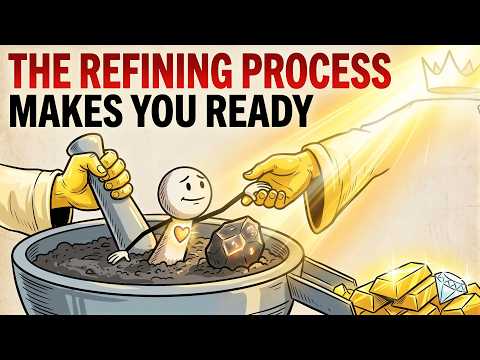
Affliction and suffering — the distinction nobody taught you
Affliction is not chosen. It is not a punishment. It is universal. Cancer. Chronic illness. Disability. Loss. Grief. Betrayal. Financial collapse. Natural disaster. The death of someone you cannot live without. The diagnosis that arrives without warning. The body that simply wears out. Affliction falls on the just and the unjust. It is not calibrated to deserve. It is the consequence of living in a finite physical world as a finite physical being. It is not optional.
Suffering is the interior response to affliction. The meaning you give it. The story you tell yourself about why. The identity you build around the pain. The God you decide this reveals. The future you decide the affliction forecloses. The posture of your spirit toward what happened. Suffering is not inevitable. Even in the worst possible circumstances, the response remains available to be chosen differently.
Viktor Frankl discovered this distinction not in a therapist's office but in Auschwitz — one of the most systematically evil environments ever constructed by human beings. He lost his parents, his brother, and his pregnant wife in the camps. He could not choose what was taken from him. He discovered he could choose what it meant.
Viktor Frankl — the secular miracle of an ancient truth
Viktor Frankl was a young Austrian-Jewish psychiatrist who arrived at Auschwitz in 1942, carrying an unfinished manuscript in his coat — a book about logotherapy, his developing theory of meaning. The manuscript was taken from him at the gates and destroyed. He spent three years in four different concentration camps. He watched roughly ninety percent of his transport group killed within hours of arrival.
What he observed there changed the history of psychology. The prisoners who survived — not physically, but psychologically, spiritually, as human beings — were not necessarily the strongest or the best-fed or the most favored by circumstance. They were the ones who found meaning in their suffering. Who kept a reason to live. Who maintained what he called "the last of the human freedoms" — the freedom to choose one's attitude in any given set of circumstances.
When we are no longer able to change a situation, we are challenged to change ourselves.
He could not change Auschwitz. He could not save his family. He could not alter a single material fact of his situation. But he could choose — deliberately, daily, sometimes moment by moment — how he faced it. Whether it would reduce him to an animal or deepen him into something he had not yet been.
He described watching prisoners give away their last piece of bread. Men who had every biological reason to hoard it, every survival instinct pressing them toward self-preservation — giving it to someone weaker. These men were being destroyed physically. They were becoming more fully human at the same moment. Frankl concluded this was not a paradox. It was the deepest truth about human beings: we are not determined by our circumstances. We are the gap between stimulus and response — and in that gap lives our freedom, our dignity, and our capacity for meaning.
The German title of his book is worth knowing: Trotzdem Ja zum Leben Sagen — "Nevertheless, saying yes to life." Not because life has earned a yes. Not because the circumstances justify optimism. Despite everything. Yes, anyway. That is not denial. That is the most audacious act of freedom available to a human being.
Frankl was not a Christian. His framework was psychological and existential, not theological. And yet what he discovered in Auschwitz is precisely what Job discovered in his ash heap, what Paul discovered in his chains, what the woman dying of cancer discovered in her final months with her children. The framework is secular. The truth is ancient. It has only ever been one truth.
Three biblical witnesses who already knew
Job — the man God bragged about who lost everything. Job is blameless. The text says so explicitly. God points to him with what can only be described as divine pride: "Have you considered my servant Job? There is no one like him on earth — a blameless and upright man." And then catastrophe descends. His wealth, his children, his health — gone in sequence. His friends arrive and do what religious people always do in the presence of inexplicable suffering: they explain it. You must have sinned. You must be hiding something. God's verdict at the end of the book: the friends were wrong. They had not spoken the truth about God. Job, who argued, wept, demanded an audience, accused God of injustice — Job spoke truth. Not because the theology of his accusations was correct, but because he was honest about his experience rather than manufacturing a religious explanation that protected the image of God at the expense of his own reality.
Paul — the thorn that stayed and the grace that didn't leave. Paul called his affliction "a messenger of Satan" — a torment severe enough to attribute to a hostile spiritual source. He prayed three times for removal. The answer he received was not healing but presence: "My grace is sufficient for you, for my power is made perfect in weakness." Paul then does something extraordinary: he chooses to find in the thorn not evidence of divine abandonment but the condition that makes divine power most visible. This is not resignation. This is the active, chosen reorientation of meaning — the same move Frankl made in Auschwitz, the same move Job made when he finally stopped waiting for an explanation. The thorn did not go away. Something larger than the thorn became available.
Jesus — "He causes his sun to rise on the evil and the good." Jesus makes the operating principle of the physical world explicit in Matthew 5:45: God "causes his sun to rise on the evil and the good, and sends rain on the righteous and the unrighteous." This is not a complaint. It is a description. The universe does not run on a merit-based weather system. The rain falls on everyone. And when the disciples ask in John 9 about the man born blind — "who sinned, this man or his parents?" — Jesus answers: "Neither this man nor his parents sinned." The affliction had no moral cause. It was not punishment. It was not the mark of disfavor. It was the condition that became the occasion for something remarkable. God is not the explanation for suffering. God is the presence within it.
We are a mosaic — not a verdict
Every human life is a mosaic — composed of pieces that, seen up close, look like random fragments of color and shadow, some beautiful and some jagged, some chosen and some not. The pieces include: the family you were born into, which you did not choose. The genetics you carry, which you did not choose. The era and culture that shaped you, which you did not choose. The accidents and illnesses and losses that arrived without invitation.
And alongside those unchosen pieces: the choices you made, the character you built or failed to build, the relationships you invested in or neglected, the meanings you assigned to what happened to you, the posture of your spirit toward the life you were given.
Affliction belongs to the first category. Suffering belongs to the second. The cancer is not punishment. The depression is not spiritual failure. The chronic pain is not evidence of disfavor. These are pieces of the mosaic that arrived without being sent for. What you do with them — the meaning you make, the character that forms, the compassion that develops because you know from the inside what it is to hurt — that is also part of the mosaic. And it is the part you get to shape.
The prosperity gospel looks at the mosaic and tells you the dark pieces are your fault — insufficient faith, unconfessed sin, inadequate prayer. That theology does not comfort the suffering. It adds the weight of spiritual failure to people already carrying more than they can hold. It is pastorally devastating and biblically unsupported, and it belongs in the same category as Job's friends: sincere, earnest, wrong, and gently corrected by God.
Perception is everything — the God we imagine changes everything
The question "why do bad things happen to good people?" carries an embedded assumption about who God is. If God is the transaction-deity of the ghost cults — the one who blesses compliance and punishes deviation — then affliction is always evidence of something. It is either punishment or teaching or withheld blessing for insufficient faith. And the suffering person spends their energy trying to figure out what they did wrong instead of receiving the grace that is actually present.
But if God is the one Jesus revealed — the Father who sends rain on the just and unjust alike, who weeps at Lazarus's tomb even knowing what he is about to do, who is present in the valley of the shadow of death rather than absent from it — then affliction changes its character entirely. It is still painful. It is still real. It is not evidence of abandonment. It is the human condition, happening to a human being who is held inside a love that does not calibrate itself to circumstances.
Between stimulus and response there is a space. In that space is our power to choose our response. In our response lies our growth and our freedom.
That is Frankl, in secular language. The spiritual translation: affliction is the stimulus. The Father's presence is available in the space. Suffering — the contraction of the spirit into despair, the reduction of God to an absentee or a punisher — is the response we do not have to choose.
When you trust God, suffering becomes optional. Not the affliction. The suffering. The interpretation that says this means God is not here, that you are abandoned, that the darkness is permanent and the silence is final — that interpretation is the suffering. And it is a choice. Not an easy choice, not one made once and held effortlessly. But a choice available in every moment, including the very worst ones. Frankl made it in Auschwitz. Paul made it in chains. Job made it in ash. The woman dying of cancer made it for her children every morning.
We are not the sum of what has happened to us. We are the sum of what we chose to do with what happened to us.
The last inner freedom — what nobody can take
Frankl observed something in the concentration camps that the guards could not have predicted: there were prisoners who maintained their humanity in conditions specifically designed to strip it away. Who shared their last piece of bread. Who encouraged others when they had nothing left to give. Who, in the middle of systematic dehumanization, chose how to face the morning.
He called this "the last of the human freedoms" — the freedom to choose one's attitude in any given set of circumstances. Everything else can be taken. This cannot. The Roman Empire could chain Paul. It could not determine what chains meant to him. Satan could afflict Job. It could not determine what Job made of the affliction. The Nazis could strip Frankl of everything he owned. They could not strip him of the gap between stimulus and response.
"I have learned" — not "I was born with" and not "I was divinely granted." Learned. Through the experience of having plenty and the experience of having nothing. Through the thorn that stayed and the answer that came anyway. Contentment is not a circumstance. It is a practice. A capacity built in the same fires that could have destroyed it.
Bad things happen to good people because bad things happen to people — all of them, just and unjust, faithful and faithless, with sufficient prayer and insufficient prayer, with good theology and bad theology, in the prosperity gospel church and out of it. Affliction is not selective. Rain falls on everyone.
What is selective is the response. What is available — not automatically, not without practice, not without the kind of deep spiritual work that Job did and Paul did and Frankl did — is the capacity to face affliction without being destroyed by it. To hold the thorn without letting the thorn define the territory. To say, from the middle of Auschwitz or the middle of a diagnosis or the middle of the worst thing that has ever happened to you: Nevertheless, yes. Nevertheless, still here. Nevertheless, God is present, and that has always been enough.
Bad things happen to good people because we are human, and being human has always included affliction. What has never been required is suffering.
The God who made you did not design the universe to punish the faithful with pain. He designed it with free will — yours and everyone else's — and physical laws that do not exempt the righteous, and a love that is present in the darkness rather than only in the light. He is not the explanation for your suffering. He is the presence within it.
Your perception of that presence — your picture of who God is and what his being-there means — is not a small thing. It is the variable that changes every other variable. Frankl found it in Auschwitz without a scripture verse. Job found it in his ash heap after forty chapters of argument. Paul found it in chains after three unanswered prayers. The cancer mother found it and gave it to her children as the most valuable thing she had left to give.
The affliction is real. It is not punishment. It is not evidence of insufficient faith. It is the human condition, arriving in the life of a person who is held — in the middle of it, through the middle of it, on the other side of it — by something that does not require the affliction to be removed in order to be completely present in it.
That presence is sufficient. It always has been. Viktor Frankl could not prove it with scripture. He proved it with his life. And so did the others. And so, in whatever way is available to you in whatever is happening right now — so can you.
Join the conversation
Comments & ideas
Have a thought, a question, or something this stirred up? Leave it below.
Loading comments…
Keep exploring
Related Bible questions
Watch alongside