A question worth sitting with
What is the Torah?
Most Christians skim it. Jews live inside it. The first five books of the Bible are the foundation Jesus said he came to fulfill — not abolish.
Understanding the Torah changes how the rest of the Bible reads — and how Jesus himself sounds. The root system of the tree, not an outdated appendix.
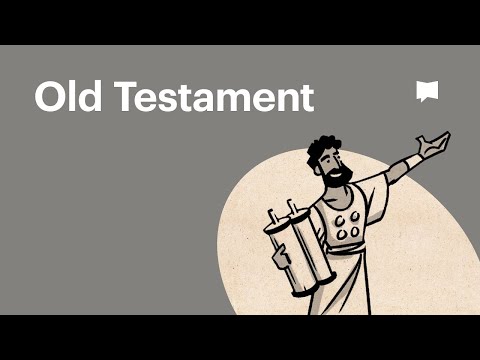
The word "Torah" means instruction, or teaching. Not "law" in the restrictive, burdensome sense that the word has acquired in popular religious culture — as in a list of rules designed to make your life harder. The Hebrew word is closer to the idea of a parent's guidance to a child: the kind of teaching that comes from love, aimed at flourishing, pointing toward a life that actually works. When Jesus said he came to "fulfill the Torah, not abolish it," he was not dismissing a bureaucratic legal code. He was claiming to embody the deepest intention of the most sacred text in his tradition — the teaching that had shaped his people for three thousand years.
Most Western Christians encounter the Torah the way you might encounter the basement of a house you inherited: you know it is foundational, you would prefer not to spend too much time down there, and you occasionally surface with something strange that you cannot quite explain without context. The genealogies. The dietary laws. The instructions for building the Tabernacle in detail so extraordinary it runs to several chapters. The repetitions. The stories that seem morally troubling by modern standards. The parts that just seem… old.
What gets lost in this skimming is the most important thing: the Torah is not old in the sense of outdated. It is old in the sense of foundational — the way the root system of a large tree is old. You do not see it. It is entirely responsible for everything above ground.
The five books — what each one actually is
Bereshit / Genesis — "In the Beginning." Origins. Creation, Adam and Eve, the Fall, Noah, the tower of Babel, and then the long story of Abraham, Isaac, Jacob, and Joseph — the founding family of the people who will become Israel. This is not primarily a science textbook about how the world was made. It is a theology of who made it and why — and a family story about the people through whom the Creator chose to work in the world. Genesis contains the seeds of everything that follows: covenant, promise, human freedom, divine faithfulness, and the long tension between what God intends and what humans choose.
Shemot / Exodus — "Names." Liberation. Moses, the burning bush, the plagues, the Passover, the parting of the sea, and the giving of the Ten Commandments at Sinai. Then the construction of the Tabernacle — the portable dwelling place of God — in extraordinary detail. The Exodus story is the central event of the entire Hebrew Bible — the moment that defines the relationship between God and Israel more than any other. Everything else is interpretation of this moment. The God who acts in history. The God who hears the cry of the enslaved. The God who delivers.
Vayikra / Leviticus — "And He Called." The book most Christians skip entirely — and the one that contains the verse Jesus called "the second greatest commandment": "Love your neighbor as yourself" (Leviticus 19:18). Leviticus covers the sacrificial system, the priesthood, purity laws, the sacred calendar, and social justice legislation — including laws protecting foreigners, the poor, the worker, and the vulnerable. It is not just ceremonial. It is the architecture of a society built on holiness as a way of life — the radical idea that the sacred is not confined to the temple but extends into every corner of daily existence.
Bemidbar / Numbers — "In the Wilderness." The wilderness years. Forty years of wandering after the Exodus, the census records that give the book its English name, and the stories of what happens to a people between liberation and promised land — including complaint, rebellion, the spies' fearful report, and the consequences of faithlessness. The wilderness is the Bible's great metaphor for the in-between — the necessary, painful space between where you were and where you are going. Every reader who has ever been between chapters of their own life is in the book of Numbers.
Devarim / Deuteronomy — "Words" / "The Second Law." Moses's farewell address — three sermons given on the edge of the Promised Land, reviewing and reinterpreting everything that has happened since Sinai. Moses will not cross the Jordan. He knows it. These are his last words to the people he has led for forty years. Deuteronomy contains the Shema ("Hear, O Israel, the Lord our God, the Lord is one"), which Jesus called the greatest commandment. It is Moses at his most pastoral: not giving new laws but helping a people understand why the laws they have been given are the gift of a God who loves them.
How Jesus lived inside it
This sentence has been misread for two thousand years in a way that makes Jesus sound like he is explaining why the Torah no longer matters. He is saying the exact opposite. He is saying that everything the Torah was pointing toward — its deepest intention, its fullest expression — arrives in him. He is not the end of the Torah. He is its destination.
Jesus was raised in a Jewish home, educated in a Jewish school, worshipped in a Jewish synagogue, observed Jewish feasts, prayed Jewish prayers, and quoted the Torah constantly. When he was asked which commandment was greatest, he quoted Deuteronomy 6:5 and Leviticus 19:18 — two Torah passages — and said everything else hangs on these two. He was not replacing the Torah with something new. He was distilling it to its irreducible core. Love God with everything you have. Love your neighbor as yourself. This is what the Torah was always about, underneath the ceremonial legislation and the historical narrative.
The Sermon on the Mount — "you have heard it said... but I say to you" — is not Jesus contradicting the Torah. It is Jesus doing what Jewish teachers called midrash: digging beneath the surface of the text to find its deeper intention. The Torah said "do not murder." Jesus says the anger that leads to murder is the real issue. The Torah said "do not commit adultery." Jesus says the objectifying gaze that precedes the act is the real issue. He is not loosening the Torah. He is intensifying it — taking it to the level of the heart rather than leaving it at the level of the behavior.
What Jews know that Christians often miss — living inside it
For Jewish communities across twenty-five centuries, the Torah has not been an ancient document stored in a museum. It has been a living presence — read aloud in community every Sabbath, studied throughout the week, carried through history, debated across generations. The Torah scroll (the Sefer Torah) is housed in the ark at the front of the synagogue, dressed in fabric, adorned with silver. When it is carried through the congregation, people reach out to touch it. When it is dropped, the entire congregation fasts in mourning. This is not superstition. It is the embodied recognition that the Torah is not primarily information. It is encounter.
The Jewish practice of Torah study involves not just reading the text but the accumulated commentary of thousands of years — the Talmud, the Midrash, Maimonides, Rashi, and centuries more. A passage studied by a student today arrives with the weight of every argument that has ever been made about it. The rabbis taught that "there are seventy faces to the Torah" — meaning the same text yields different truths as the reader changes and as the generation changes. The Torah is not exhausted by any reading of it. It contains more than has yet been found.
When Christians skip the Torah — treating it as pre-Christ material now superseded — they lose the entire context that makes Jesus intelligible. His miracles echo Elijah and Elisha. His feeding of the five thousand echoes the manna in the wilderness. His transfiguration echoes Moses on Sinai. His entry into Jerusalem echoes the Psalms. His last supper is a Passover meal. Without the Torah, Jesus is a figure without a story. With the Torah, he is the story's arrival point — the moment everything converges.
Gregg Braden and the God Code — the Torah in your DNA
What if the most ancient name in the Torah — YHVH, the unpronounceable name of God — is literally written into the molecular structure of every human cell?
Gregg Braden, in his book The God Code, makes a claim that sounds like the premise of a science-fiction novel — until you follow the actual argument. Every ancient alphabet, including Hebrew, assigned a specific numerical value to each letter — a system called gematria. This was not a later addition; it was how the alphabets were designed. Hebrew letters are simultaneously numbers. The four letters of the divine name — Yod, Hey, Vav, Hey (י ה ו ה), represented as YHVH — have numerical values in the Hebrew system: 10, 5, 6, 5.
Now here is where it gets extraordinary. The four chemical bases of DNA — the building blocks of all life on earth — are hydrogen, nitrogen, oxygen, and carbon. Braden cross-referenced these elements' atomic mass values with the ancient Hebrew numeric system. The mapping he reports: hydrogen → Yod ("Hand of God"), nitrogen → Hey ("Behold"), oxygen → Vav ("Nail / And"), carbon → Hey ("Behold"). The four DNA elements spell YHVH — translated as "God Eternal Within the Body."
Braden's conclusion: the unpronounceable name of God — the name so sacred that ancient Jews would not speak it aloud — is embedded in the molecular structure of every human cell, in every person who has ever lived, regardless of their faith, ethnicity, or theology. The message encoded in the building blocks of your biology, translated through the numerical system of the ancient Hebrew alphabet, reads: "God Eternal Within the Body."
He is careful to note the statistical odds: the probability that this relationship occurred by chance, he argues, is approximately one in 200,000. Skeptics counter that the correspondence requires selecting specific atomic mass values and specific gematria tables in a way that could be accused of cherry-picking. Both are worth holding. What is not in dispute is the remarkable resonance between the oldest name in the Torah and the molecular architecture of life itself.
Whether you accept the mathematics as literally encoded or read it as a beautiful metaphorical convergence, the implication is the same as what Paul wrote: "In him we live and move and have our being." The presence of the divine is not somewhere else, waiting to be visited. If Braden is right, it is written into the substrate of your physical existence — in a language 3,500 years old, carried in every cell of your body, saying the same thing the Torah has always been saying: God is here. God is within. You are not alone.
The Torah codes — patterns hidden in plain sight
Starting in the 1990s, mathematicians discovered something in the Hebrew Torah that generated controversy and fascination in equal measure. Dr. Eliyahu Rips, a mathematician at Hebrew University in Jerusalem, and his colleagues published research in 1994 in the peer-reviewed journal Statistical Science claiming to have found statistically significant patterns in the Hebrew Torah using a method called Equidistant Letter Sequences (ELS). By selecting every nth letter from a starting point, clusters of related words — names, dates, events — appeared to be encoded in the text in arrangements far beyond statistical chance.
The paper passed peer review. It also generated enormous controversy. The Statistical Science editor's note acknowledged: "Our referees were baffled: their prior views ranged from 'unconvincing' to 'dramatic.' All, however, felt that whatever the paper's ultimate status, it merited publication." That is an unusual statement for a peer-reviewed journal to make about a math paper — and it captures exactly the unresolved status of the Torah code phenomenon.
Whether the codes are statistically genuine patterns or the result of the enormous letter-dataset allowing pattern-finding through selective searching is a live debate among mathematicians and cryptographers. What is not in debate is that the Torah, written in unpointed Hebrew with no spaces between words, contains a letter density and structural complexity that makes it uniquely receptive to this kind of analysis. The Torah, on this view, is not old and simple. It is ancient and inexhaustible.
The Shema — the heartbeat of it all
This is the prayer that Jesus called the greatest commandment. It is recited every morning and every evening by observant Jews — and has been for three thousand years. It was on the lips of Jewish martyrs as they died. It is the first prayer a Jewish child learns and the last words a Jewish person ideally speaks before death. It is the beginning and end of Jewish life.
"These commandments are to be on your hearts." Not in your head. Not in your calendar. On your heart. The Torah was never intended to be an external code that you follow from a distance. It was intended to be internalized — to shape the way you see, the way you respond, the way you treat the people you encounter. That is what "love the Lord your God with all your heart, soul, and strength" actually means in context: the total orientation of a human life toward the divine, with nothing held back.
When Jesus was asked what the greatest commandment was, he quoted the Shema. When he was asked what the second was, he quoted Leviticus 19:18. He then said: "All the Law and the Prophets hang on these two commandments." He was not discarding the Torah. He was lifting out its load-bearing walls and showing them to people who had gotten so busy with the architecture that they had lost sight of what the building was for.
The Torah is not an old Jewish book that Christians are allowed to ignore because they have the New Testament. It is the root system of the tree. Jesus is the fruit. You cannot understand the fruit without knowing the tree — and you cannot know the tree without going underground, where the deepest roots are.
Why this changes everything
If the Torah is the foundation Jesus came to fulfill, then reading it changes how Jesus sounds. The Beatitudes echo the Psalms and the Prophets. The Lord's Prayer is structured around Jewish prayers that predated Jesus. The Last Supper is a Passover seder. The "bread of life" discourse in John 6 echoes the manna in the wilderness. The imagery of the Good Shepherd echoes Psalm 23 and Ezekiel 34. You cannot hear the resonance without knowing the tradition it resonates with.
And if Gregg Braden is right — if the divine name is literally encoded in the molecular architecture of every human cell — then the Torah's central claim about human beings becomes biology as well as theology: you are not a creature straining toward God from a distance. You are a creature in whom God has placed, from the very moment of your construction, the signature of the divine name. Not as religious performance. As physical fact.
The Torah has been calling this since Sinai. "I am the Lord your God." Not "I was." Not "I might be if you are good enough." I am. Present tense. Ongoing. Inescapable. Written, if Braden is right, in the only language that cannot be revised or corrected or lost — the one embedded in the chemistry of life itself.
The Torah is not the Old Testament. It is the foundation the New Testament is built on. And possibly — the foundation you are built from.
Christians who skim it are skimming the roots of their own faith. The genealogies are boring until you realize they are the unbroken thread of a promise being kept. The laws are strange until you realize they are the architecture of a society built on the revolutionary idea that the God of the universe cares about how you treat your neighbor, your worker, your immigrant, your animal, your land. The Psalms are poetry until you realize they are the emotional vocabulary of every human being who has ever argued with God, wept before God, and found, at the end of the argument, that God was still there.
Jesus read this book as a child. He memorized it. He prayed its prayers. He sang its songs. He argued its arguments. He embodied its deepest intention. To know the Torah is to know something of what shaped the mind and heart of the person who looked at the religious institutions of his day and said, very quietly, that the whole thing hinged on two sentences: love God with everything, and love your neighbor as yourself.
That was not a new idea. It was always the idea. The Torah said it first. Jesus said it most clearly. And if Braden is right, the very cells of your body have been saying it since before you took your first breath.
Join the conversation
Comments & ideas
Have a thought, a question, or something this stirred up? Leave it below.
Loading comments…
Keep exploring
Related Bible questions
Watch alongside