A question worth sitting with
Is Jesus coming back, and when?
He promised he would return. He sent the Holy Spirit to hold the gap until he does. He told us the timing is known only in the councils of Paradise — and twice, in the same evening, he told us to stop trying to predict it and start living the kingdom he already brought.
This is the one question that cannot be neatly resolved. But there's an enormous difference between the faith that says 'he's coming to rescue us from this terrible world' and the faith that says 'he already gave us everything we need.' That difference is everything.
There is a question that sits at the center of Christian hope and at the center of Christian anxiety simultaneously — and depending on which church you grew up in, it either gave you something to look forward to or something to lie awake fearing. The question is: is he coming back? And if so — when, how, in what form, and what happens to the people who are not ready? The Left Behind franchise sold over 80 million books answering those questions with dramatic certainty. The actual biblical scholars who have spent their careers studying the Greek texts of the New Testament answer them with considerably more humility — and considerably more depth. The Urantia papers, which we use throughout this series as a broader frame, answer them with something that sounds radical but is actually the most honest position available: we do not know. And that not-knowing is itself a teaching.
This is the one blog in the series that cannot give you a neat resolution. The Second Coming — or parousia in the Greek — is one of those questions built on faith rather than calculation. But there is an enormous difference between the faith that says "he's coming to rescue us from this terrible world, so there's no point trying to improve it" and the faith that says "he's already given us everything we need to live fully, and the promise of his return is the horizon we walk toward, not the exit we wait for." That difference is everything.
The word itself — parousia means presence, not evacuation
The word the New Testament uses for the return of Christ is parousia (παρουσία) — and its primary meaning is not "dramatic cosmic event" but simply presence. It was used in the ancient world for the official visit of a king or dignitary to a city — the arrival of someone whose presence changes everything. It carries connotations of arrival after an absence, of being present with people who have been waiting. It does not inherently carry the connotations of terror and judgment that centuries of apocalyptic theology have attached to it.
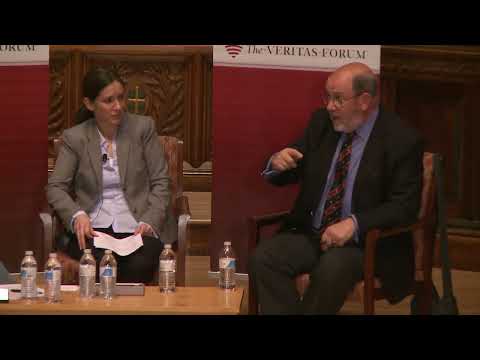
The problem of the delay of the parousia is a modern myth. First-century Christianity didn't see itself so much as living in the last days, waiting for the parousia, as living in the first days of God's new world. — N.T. Wright
Read that again. The early church did not primarily see itself as people waiting for something to come. It saw itself as people already inside something that had begun. The resurrection was not the beginning of a waiting period. It was the beginning of the new creation — the first day of God's reordering of everything. The parousia, when it comes, is not the rescue of people treading water until then. It is the completion of something already decisively underway.
There are three other Greek words the New Testament uses for Christ's return: apocalypsis (unveiling — he is currently present but unseen, and will be revealed); epiphaneia (appearing, used for both his first and second comings); and the language of the "coming of the Son of Man" in Matthew 24, which Wright argues refers primarily to the destruction of Jerusalem in 70 AD — the vindication of Jesus against the religious establishment that condemned him — not to a future cosmic event at the end of history. Most biblical scholars accept at least part of this preterist reading. Whether all of Matthew 24 was fulfilled in 70 AD, or some of it points beyond, is a live scholarly debate.
What the Mount of Olives conversation actually reveals
The most important passage about the Second Coming is Matthew 24 — the Olivet Discourse — where Jesus speaks to his disciples on the night before his arrest, overlooking Jerusalem by moonlight. And the Urantia papers' account of that evening (Paper 176) gives us something the Gospel records only partially captured: the full emotional and theological texture of what Jesus was actually saying, and why his disciples misunderstood it so profoundly.
Notice what Jesus does here. He makes two promises, in order. First: the Spirit of Truth will come — and this he fulfilled on the day of Pentecost. Second: he will sometime personally return. But he says something critical between those two promises: "Even though I shall thus be present with you in spirit..." The gap between the ascension and the return is not absence. It is a different kind of presence. The Holy Spirit holds the gap — not as a placeholder for the real thing, but as a genuine, ongoing, comforting, guiding, transforming presence available to every human being in every age.
The disciples, being human, immediately tried to connect the promised return to the predicted destruction of Jerusalem. They could not conceive of a catastrophic event — the destruction of the Temple — without it also being the end of the world and the occasion for the Messiah's return in power. Jesus spent the entire evening trying to separate those two events in their minds. The Urantia papers note, with unusual candor: "Of all the discourses which the Master gave his apostles, none ever became so confused in their minds as this one." And then — remarkably — the papers note that in the second century, a Jewish apocalyptic text was inserted into the Matthew Gospel and "bodily copied" into the Mark and Luke records. Much of what became the basis for end-times theology may have entered the canonical text from a non-dominical source.
What scholars actually say — the four main views
Preterism — most of it already happened in 70 AD. A significant and growing school of biblical scholarship holds that the "coming of the Son of Man" language in the Gospels refers to the destruction of Jerusalem in 70 AD — the moment when Rome's legions leveled the Temple, scattered the Jewish people, and vindicated Jesus's prophetic words spoken forty years earlier. N.T. Wright is the most prominent contemporary scholar associated with this view. This does not deny that Christ will ultimately return — the Nicene Creed, which Wright fully affirms, states that Christ will come again in glory to judge the living and the dead. It relocates most of the dramatic end-times language to its proper historical context.
Premillennialism — a literal thousand-year reign. The traditional evangelical view: Christ will return bodily and visibly before a literal thousand-year reign on earth (the Millennium), at which point history as we know it ends and eternity begins. The specific form popularized by Left Behind — pre-tribulation rapture followed by seven-year tribulation followed by visible return — is a recent variant invented by John Nelson Darby in the 1830s that no church tradition taught for the previous 1,800 years. The broader premillennial framework, however, is ancient and held by serious scholars.
Amillennialism — the kingdom is already and not yet. The majority view of Catholic, Orthodox, and Reformed Christianity: there is no literal thousand-year reign on earth. The "millennium" of Revelation 20 refers to the current age of the church — the period between the resurrection and the return, during which Christ reigns spiritually through his body in the world. When Christ returns, he will come once, visibly, and eternity will begin. No pre-tribulation rapture, no separate seven-year period, no secret removal of believers. This is the view Augustine held, the view of the Reformers, and the view that defined Christian eschatology for most of church history.
Postmillennialism — the gospel transforms before he returns. Christ will return after a long period of gospel advance in which the world is progressively Christianized — not perfectly, but significantly. The Second Coming is not a rescue from a world in terminal decline but the culmination of a world progressively being redeemed. This view has the practical advantage of motivating engagement rather than withdrawal: if the gospel is meant to transform the world before Christ returns, then the task of his followers is not passive waiting but active participation in that transformation.
The Urantia view — he will return. Many times. On his own schedule.
We are sure of only one thing: He has promised to come back. We have no idea as to when he will fulfill this promise or in what connection. — Urantia Paper 176:4
The Urantia papers take what is perhaps the most honest and liberating position available on the Second Coming. Jesus promised to return. The timing is known only in the councils of Paradise. Not even the angels of heaven know when this will occur. He may return once. He may return many times. He may come in connection with the end of an age, or he may come unannounced as an isolated event.
The papers note something theologically profound: when Christ does return, "all the world will likely know about it, for he must come as the supreme ruler of a universe and not as the obscure babe of Bethlehem." And yet — they add — "if every eye is to behold him, and if only spiritual eyes are to discern his presence, then must his advent be long deferred." The tension between universally visible and spiritually discerned is not resolved. It is held honestly. Some things cannot be known until they happen.
The papers also say something that should stop every end-times calculator in their tracks: the Second Coming is "of no more practical importance to human beings than the common event of natural death, which so suddenly precipitates mortal man into the immediate grasp of that succession of universe events which leads directly to the presence of this same Jesus." In other words: you do not need to wait for the Second Coming to encounter the risen Christ. Death — that "common event of natural death" — leads you directly into his presence anyway. The Second Coming and your own death both lead to the same destination. Which one comes first is, practically speaking, irrelevant to how you should live today.
The Jewish mistake we are still making
The Jews of the first century were waiting for a Messiah. They were absolutely right that a Messiah was coming. They were absolutely wrong about what kind of Messiah he would be and what he would do. They expected a political-military deliverer who would restore the Davidic kingdom, expel the Romans, and establish Israel as the dominant world power. When Jesus came — and refused to be that — most of them rejected him. And in their ongoing wait for the military Messiah who never came, they eventually drove themselves into a catastrophic war with Rome that resulted in the destruction of Jerusalem in 70 AD and the scattering of the Jewish people across the world for nearly two thousand years.
They were waiting for the wrong thing in the wrong way, and the waiting itself destroyed them.
Now ask honestly: what is the dominant posture of much of popular evangelical Christianity toward the Second Coming? It is waiting for Jesus to come rescue us from a world in terminal decline. It is the assumption that things will get worse and worse until he arrives to fix everything. It is the theological permission to disengage from the project of making the world better, because what's the point if he's coming back anyway. It is — in structural terms — the same mistake the first-century Jews made: waiting for the wrong kind of intervention in the wrong kind of way, using the prediction of coming rescue as an excuse to avoid the responsibility of the present.
Jesus told his disciples explicitly, on the Mount of Olives: "Each generation of believers should carry on their work, in view of the possible return of the Son of Man, exactly as each individual believer carries forward his lifework in view of inevitable and ever-impending natural death." The parable of the talents, told that same evening, is the clearest possible statement of what God expects in the interval: not passive waiting, but faithful investment. Not burial of the gift in anxious preservation. Growth. Risk. Fruitfulness. Carry on until I come.
Are we doing the same thing now?
Here is the question that should make every person who grew up inside 20th-century evangelical Christianity stop and sit with some discomfort: are we doing to the Second Coming exactly what first-century Jews did to the First? Using the promise of divine intervention as the organizing principle of our spiritual identity — while waiting for the wrong thing, in the wrong way, for the wrong reasons?
The Jews expected a conquering king who would vindicate Israel. Jesus did overturn an oppressive power. He did establish a kingdom. He did free people from bondage. Just not in any way they expected or recognized — and so most of them missed it entirely, and kept waiting for the version they had decided it had to be.
Now consider what much of 20th-century popular Christianity has been waiting for. The Second Coming — the Hollywood version — is the great vindication moment. The moment when every sacrifice finally gets its reward. When the people who had to drag themselves to church on Sunday mornings while their friends were sleeping in get to say see, I told you so. When every Bible verse memorized instead of watching cartoons, every dance skipped, every movie avoided, every pleasure deferred in the name of holiness — all of it redeemed at once, in a single dramatic reversal where the righteous are lifted up and the skeptics are left standing in the field with their mouths open.
And then — in this version — we walk through the pearly gates into the Hollywood rendering of heaven: gold-paved streets gleaming in perpetual light, angels with harps playing somewhere in the middle distance, everyone in white robes, all conflict resolved, all questions answered, all the people who said faith was foolish now recognizing their error too late. Justice served. Score settled. Credits roll.
That image is so embedded in 20th-century Christian culture that most people who grew up inside it absorbed it without ever examining it. It was the emotional architecture underneath all of it: hold on, sacrifice now, and eventually — dramatically — you will be proven right and rewarded.
But look at what that framing actually produces. It produces a faith organized around future vindication rather than present transformation. It produces people who are waiting to be right rather than choosing to love. It produces a spiritual posture that is fundamentally passive — enduring the present rather than inhabiting it, tolerating the world rather than serving it, counting down rather than showing up. And it produces, when the questions start coming — when someone finally asks what 666 actually meant, or where the Rapture came from, or whether the pearly gates are a literal architectural feature or a poem — an entire theological structure that begins to fall apart at the first honest inquiry.
That version of the Second Coming is the First Coming misunderstood, repeated. The Jews used the coming of the Messiah as the promised moment of national vindication. Much of popular Christianity has used the Second Coming as the promised moment of personal vindication. Both miss the same thing.
He did not come — and will not come — to make us right. He came to make us love. He came to make us free. He came to make us genuinely, irreversibly, undefensibly alive in a way that has nothing to do with being proven correct and everything to do with being genuinely transformed.
The pearly gates are not a reward for correct theology or sufficient sacrifice. The kingdom he brought is not the cosmic moment when the doubters have to admit they were wrong. If those images have been the organizing emotional reality of your faith, then the good news — the actual gospel — is that what he brought is infinitely better than that. And it does not require waiting. It is available now. Today. In this ordinary moment, on this ordinary day, with exactly the life you currently have.
A new heaven and a new earth — what could that mean?
The vision of "a new heaven and a new earth" in Revelation 21 is one of the most beautiful and most debated passages in all of Scripture. John sees "the first heaven and the first earth had passed away" — and in their place, a new creation, with God dwelling directly with humanity, "wiping every tear from their eyes," and declaring "I am making everything new." Three readings compete:
The replacement reading: the current physical universe is literally destroyed and replaced with a new one. The Urantia papers gently push back on this — not by denying that planets and ages end, but by describing a universe so vast and so structured that "ends" at the planetary or age level are not the end of anything at the cosmic level. Some planets burn out. Some ages conclude and new dispensations begin. A planet's story can end without the universe's story ending. The Urantia papers describe Michael (Jesus) as the ruler of a vast local universe containing millions of inhabited worlds — and Urantia (Earth) as one sphere among multitudes.
The transformation reading: N.T. Wright's position — the current creation is not destroyed but renewed, healed, and restored. The word translated "new" in Revelation 21 (Greek: kainos) does not mean "different" — it means "renewed, refreshed, restored." Like a building that is renovated rather than demolished. The new heaven and earth is this heaven and earth, liberated from decay, corruption, and death. On this view, creation matters — caring for it is not futile because what we do here participates in what will be restored.
The symbolic reading: "heaven and earth" is a cosmic merism — a way of saying "everything." A "new heaven and earth" means a completely transformed state of existence in which the distinction between the divine realm and the human realm is dissolved. Not a new planet, but a new mode of being — the full arrival of what the resurrection began. Whatever it means, the vision is of God with humanity, without separation, without tears, without death. That is the destination. The route is faith. The vehicle is the ongoing presence of the Holy Spirit.
Paradise ascension — the individual Second Coming
Here is perhaps the most liberating reframe in this entire blog, drawn directly from the Urantia papers' account of the Mount of Olives discourse. Jesus says something that almost no end-times theology ever quotes:
The Second Coming, for each individual human being, is death. Not in a morbid or threatening sense — but in the sense that what the whole world will experience at the end of an age, each person experiences individually at the end of their natural life: the immediate presence of the risen Christ, the beginning of the next stage of the eternal journey. The Urantia papers describe this as the beginning of the paradise ascension — the long, joyful, expanding journey from the mansion worlds through the universe, toward the presence of the Father at the center of all things.
And here is the crucial theological point about that ascension: it is not forced. Separation from God is a choice — made gradually, across a lifetime of smaller choices, until a personality has definitively oriented itself against love, against growth, against the divine. The outcome of that definitive choice is not eternal conscious torment in burning oil. It is cessation — annihilation of the self that has chosen not to survive. The wheat burns up, as Jesus described it. It does not keep burning. And for every soul that has not made that final definitive choice — which is the vast majority of human beings who have ever lived — the opportunity to choose the paradise ascension is not terminated by death. Death is a portal, not a verdict.
He already resurrected. He showed us what is bigger than death, bigger than empire, bigger than everything we fear. The Second Coming is not the rescue mission for people who checked out. It is the completion of what the resurrection began.
What we hold and how we hold it
The Second Coming cannot be scheduled. It cannot be predicted. It cannot be calculated from the Book of Daniel or the news cycle or the state of geopolitics or the development of artificial intelligence or the movement of any astronomical body. The times of the reappearing of the Son of Man are known only in the councils of Paradise. Not even the angels of heaven know. Anyone who tells you they know is telling you something the biblical text explicitly says cannot be known.
What can be known is this: He promised to return. He sent the Holy Spirit as comforter and guide until he does. He told us to carry on — to invest the gifts entrusted to us, to serve the least, to love the neighbor, to proclaim the kingdom, to bear the fruits of the spirit. The faithful response to the Second Coming is not passive waiting. It is active living — the kind of living that would be exactly the same whether he returns tomorrow or in ten thousand years.
Hold the promise. Hold it lightly enough not to build fear on it. Hold it firmly enough to let it be the horizon that orients everything else. He is coming. The universe is moving toward something. Every individual who chooses the paradise ascension is moving toward it too. You do not have to wait for the world's ending to begin your journey toward the center of everything. The journey is available now, today, through the same Holy Spirit he sent on the day of Pentecost to be the comforter of everyone who asks. The gap is held. The journey is open. The destination is real.
Choosing eternity is an ongoing process, not a single moment of decision. Every time you choose love over fear. Every time you turn toward the Father rather than away. Every time you serve rather than hoard. Every time you trust rather than control. These are the choices that constitute the paradise ascension — not a dramatic moment at a government checkpoint or a rapture event over a cornfield in Iowa, but the slow, faithful, daily orientation of a life toward what is real and permanent and true.
Stop waiting for him to fix everything. He already gave us everything we need. The Second Coming is the horizon, not the exit.
He came once as an obscure infant in an occupied territory and changed the world. He sent his Spirit at Pentecost and the frightened became fearless. He will come again in his time and in his way. And between now and then, the Spirit holds the gap — not as absence but as presence, not as placeholder but as power, not as waiting room but as the living, breathing, daily reality of the kingdom that is already, and not yet, and coming, and here.
Join the conversation
Comments & ideas
Have a thought, a question, or something this stirred up? Leave it below.
Loading comments…
Keep exploring
Related Bible questions
Watch alongside