A question worth sitting with
What happens when we die?
The Bible is more optimistic about death than you were told. And considerably more physical, active, and strange than the cloud-and-harp version.
You have an expiration date. So does everyone you love. The question of what happens after the carbon structure gives out is either the most terrifying question in human experience — or the most exciting one. It depends entirely on what the answer actually is.
Here is a fact that tends to get lost in the fog of church anxiety and end-times dread: the Bible is actually remarkably optimistic about death. Not in a naive, "everything is fine, float among the clouds with a harp" kind of way. In a "the body is temporary but you most definitely are not" kind of way. The cloud-harp image, by the way, does not appear in the Bible. It appears in medieval art and greeting cards. The Bible's picture of what awaits is considerably more interesting — and, if the scholars who have spent their careers on this are right, considerably more physical, more active, and more astonishing than anything typically preached on Easter Sunday.
We are going to look at what the Bible actually says. What the resurrection appearances of Jesus tell us — and this is wild — about what a human being becomes after death. What serious scholars across traditions have concluded. And what the broader framework of the Urantia papers adds to fill in the gaps the Bible leaves open. Then we are going to talk about the milk carton. Because the milk carton is the whole thing.
The milk carton — let's start there
Your body has an expiration date printed on the side. This was never a flaw in the design. It was always the design.
A carton of milk has a use-by date. That date does not mean the milk failed. It means the milk is being finite milk, doing exactly what finite milk does in a world governed by entropy and time. The date on the carton is not a judgment — it is information. And when the milk is gone, the carton does not cease to exist. It returns to somewhere else, becomes something else, moves in a direction the milk could not have anticipated from inside the carton.
This carbon structure you inhabit — the one reading this right now, the one with the bad knee and the good laugh and the particular way you take your coffee — is extraordinarily temporary. The atoms in your body were not there seven years ago and will not be there seven years from now. You are already, in a very real sense, a constantly changing temporary arrangement of matter that gives rise to a consciousness that is quite clearly not made of matter at all. The consciousness — the awareness, the love, the identity, the will — that is the thing that does not appear to be subject to the expiration date. The carton is finite. The question is what the milk actually is, and whether it has somewhere to go.
We are all going to shapeshift out of here. Every single one of us. The way varies — the timing is uncertain — but the destination of this particular physical arrangement is the same for every human being who has ever drawn breath. And the wisdom traditions, the scientific edge of consciousness research, and the biblical record all converge on one conclusion: what you are is not exhausted by what you can see in the mirror.
What the Bible actually says
Let's clear away the cloud-harp version first. The Bible does not describe heaven as a place where disembodied souls float eternally in a spiritual realm, playing instruments and waiting for nothing in particular. That is Plato. That is Greek philosophy. That is a vision of the afterlife that made its way into popular Christian imagination through centuries of cultural drift and has very little to do with what the actual texts say.
What the texts say is considerably stranger and more physical than that. The consistent biblical vision of the ultimate human destiny is not souls going to heaven — it is bodies being raised. Not the same bodies, exactly. But bodies nonetheless. Paul is explicit:
A spiritual body. Not no body. Not a ghost. A different kind of body — one that is imperishable, glorious, powerful. Paul uses the image of a seed. The seed that goes into the ground and the plant that comes up from it share a relationship of continuity — it is the same life, expressed in a radically different form. You would not look at an acorn and an oak tree and say they are identical. But you also would not say they are unrelated. The oak was inside the acorn all along. And what comes up from the ground after death, in the biblical picture, is continuous with what went in — but categorically more.
Many rooms. The Greek word is monai — dwelling places. The very thought that the Father's domain contains a vast number of distinct dwelling places — not one undifferentiated ethereal realm, but many specific places — suggests a universe with more real estate than most Sunday school curricula account for. As one scholar noted: in a universe with hundreds of billions of galaxies, the idea that heaven is a single small room for everyone who ever believed correctly would be a strange waste of space.
The resurrections that already happened — in the Bible
Here is the passage that almost nobody preaches on. Matthew's Gospel, reporting the moment of Jesus's death:
Dead people got up and walked into Jerusalem and appeared to people. This is not a vision. This is not metaphor. Matthew is reporting a historical event — many bodies raised, many people appeared to, in the city, in public. If you are waiting for evidence that the Bible takes the resurrection of the dead literally and physically, you do not have to wait for Easter. It was happening before Easter morning.
And then there is Lazarus — who had been dead four days, enough for decomposition to have begun ("Lord, he stinketh" is one of the Bible's most memorable lines) — who walked out of the tomb in his own body, still wrapped in grave clothes. Jesus did not reassemble a brand-new body for Lazarus. The same person who went in came out. Changed, clearly. But him.
The most interesting evidence — who didn't recognize Jesus
This deserves its own piece — and we will give it one. But for now, the thumbnail: after the resurrection, Jesus appeared to people multiple times, in multiple places, and on several of those occasions, people who knew him well did not recognize him. This is not a detail to skip past.
Mary Magdalene — in a garden, in daylight (John 20:14–15). Mary had followed Jesus throughout his ministry. She was at the cross. She went to the tomb. She knew him better than almost anyone. She turned and saw him standing there — and did not know it was Jesus. She thought he was the gardener. He was not in a hood. It was not poorly lit. She simply did not recognize him until he said her name.
Two disciples — seven miles, hours of walking (Luke 24:13–31). Two disciples walked with Jesus from Jerusalem to Emmaus — a seven-mile journey. They talked to him for hours. They discussed scripture. They discussed the crucifixion. They described Jesus as someone they had known and hoped in. They did not recognize him for the entire journey. It was only when he broke bread with them at the table that something clicked. And then he disappeared.
Seven disciples — by the shore, in the morning (John 21:4–7). Seven of the disciples, including Peter, are fishing. A figure appears on the shore and calls to them. They do not know it is Jesus. He directs them to cast their nets on the other side — they pull in 153 fish — and it is only then that John says "It is the Lord." The others still had to be told. Peter, who had known Jesus for years, did not recognize him from the boat.
Five hundred people at once (1 Corinthians 15:6). Paul records that Jesus appeared to more than five hundred people simultaneously, most of whom were still alive when Paul wrote — meaning they could be interviewed. This is not a private mystical experience. It is a mass public appearance. This many witnesses, in that era, is more than adequate for legal testimony. Something objectively happened.
The pattern is consistent and strange. The post-resurrection body of Jesus was real enough to eat breakfast, to be touched, to cast a shadow on the beach. And simultaneously different enough that people who loved him did not immediately recognize him — until he chose to reveal himself. This is not the behavior of a ghost. It is not the behavior of a resuscitated corpse. It is something else. Something that occupies physical space while also operating by different rules. Something more than a human body and in some sense continuous with it.
What was Jesus showing us? He was demonstrating — in the only way available — what a human being becomes after the transition that looks like death from this side. Not the end of the person. A different mode of the person. More. Not less.
What the scholars say — and they agree on more than you'd think
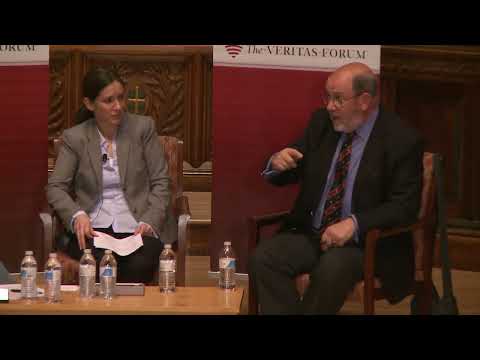
**N.T. Wright — Surprised by Hope.** Wright has spent his career arguing that the popular Christian picture of death is completely backwards. "Heaven is not the end of the story," he insists. "The NT speaks far more about the final resurrection than it does about heaven." In Wright's reading, what we call "heaven" in the popular sense — souls floating in a spiritual realm — is actually just the intermediate state, a temporary condition between death and the final resurrection. The end goal, the destination, is not departure from the earth but the renewal of the earth — heaven and earth becoming one, physical and spiritual united. We are not waiting to escape. We are waiting for restoration.
**C.S. Lewis — The Great Divorce, The Weight of Glory.** Lewis imagined the afterlife as a place so real that in comparison, the present world feels like a shadow. In The Great Divorce, the visitors from hell are so insubstantial that the grass of heaven's outer country cuts their feet like blades — they are not solid enough for the realness of what they encounter. Heaven, for Lewis, is not less real than earth — it is more real. More solid. More vivid. The present world is the dim copy of what comes after. And hell is not fire imposed from outside — it is the final state of a self that has chosen itself over everything, including reality.
**Dr. Eben Alexander — Proof of Heaven, Harvard neurosurgeon. A neurosurgeon who spent his career in the scientific mainstream — until bacterial meningitis shut down his cortex for a week and he had a near-death experience during which, by his own account, he was fully conscious despite his brain having no measurable activity. What he describes is not what the afterlife looks like in medieval paintings. It is an experience of extraordinary beauty, intelligence, and love** — and a fundamental reality of consciousness that exists independently of the brain. His experience has not been satisfactorily explained by neuroscience. His testimony matters not because one man's NDE is decisive, but because it joins a growing body of similar accounts from credible sources across every culture and tradition.
**Anita Moorjani — Dying to Be Me, NDE and cancer recovery. After collapsing into a coma with end-stage lymphoma, Moorjani describes an NDE in which she experienced a state of consciousness completely free from the fear and limitation of physical existence. She came back — and her cancer, documented medically, went into full remission within weeks. Her most consistent message: what she encountered was not doctrine or religion — it was love, vast and unconditional, that had been present all along.** The forms humans use to describe it are the map. What she experienced was the territory. And it was far larger than any map.
The bigger frame — a universe far too full to waste
The Urantia papers describe what happens after physical death in more detail than any other text — but they describe it in a way that is, if anything, more reassuring than terrifying. The papers say that what we call death is simply a transition — a change in the mode of existence, not its cessation. The personality, the identity, the memories, the relationships, the character formed across a lifetime — these are not lost. They are the very thing that continues.
What the papers describe as the destination — the "mansion worlds" referenced in Jesus's "many rooms" — are not a vague ethereal realm but specific places, with specific purposes, where the development that began here continues under far better conditions. No one graduates from a human life having become everything they could have been. The education continues. The relationships deepen. The capacities that barely had room to grow in a single human lifetime — for creativity, for understanding, for love, for wisdom — finally get the time and space to become what they were always reaching toward.
Think about the people you love who died with things unfinished. With potential unrealized. With kindness they were growing into but hadn't quite arrived at yet. The papers' description of what happens next is not a picture of those people frozen at the moment of their death, or dissolved into a formless divine unity. It is a picture of those same people — recognizably themselves — continuing to become. Across vast stretches of time and experience that make a human lifetime look like the first paragraph of a very long and very good book.
The universe is 13.8 billion years old. It contains hundreds of billions of galaxies. The idea that the only thing it produces is a 70-to-80-year human life on one planet, followed by nothing — is, to put it mildly, a poor use of a universe. The Urantia papers simply describe what a universe of this scale, populated and purposeful, would naturally provide for the beings it is producing. The answer is: far more than you thought. Far longer than you feared. Far better than you dared to hope.
You are not a body that has a soul. You are a soul that has — temporarily, briefly, wonderfully — a body. The expiration date on the milk carton is not the end of what the milk is. It is the beginning of where the milk was always going.
The question that actually matters
Here is the thing about the question "what happens when we die?" It always wants to slide into the question "what happens to me when I die?" Which is natural, and not wrong. But it is the smaller question. The bigger question is: what kind of universe is this? Is it a universe in which consciousness is an accident of chemistry that dissolves back into nothing when the chemistry stops? Or is it a universe in which consciousness is the fundamental thing — in which personality, love, creativity, and will are not byproducts of matter but the very things matter was organized to produce and express?
The biblical record, the NDE testimonies, the consciousness research, and the Urantia framework all answer in the same direction: it is the second kind of universe. You are not an accident. You are not a temporary arrangement of atoms that happens to think it exists. You are a person — the Bible says a child of the Father — and persons, by their nature, are not exhausted by their current circumstances. They are defined by where they are going.
The Urantia papers note something worth ending with: a Census Director of the universe is personally aware of your living presence on this planet. The moment you cease to function as a will creature, that record is updated. You are not anonymous. You are not one undifferentiated unit in an undifferentiated mass of humanity. You are a specific, named, known person — known before you were born and known in the moment of your last breath — whose continuation is not left to chance.
The carbon structure is finite. You are not. The milk carton has an expiration date. The milk does not.
This is not wishful thinking dressed in religious language. It is the consistent conclusion of the most honest inquiry that has ever been directed at the question — from Paul writing to the Corinthians to N.T. Wright writing in Oxford, from Mary Magdalene in a garden to a Harvard neurosurgeon in a hospital bed. Something happens after the body stops. The something involves you. It involves everyone you love. And by every reliable account — biblical, scholarly, experiential — it is not smaller than what you have now. It is larger.
Much, much larger.
You have an expiration date on your milk carton. That date is real, and approaching, and worth taking seriously. It is also not the end of the story. It may not even be the end of the beginning.
Join the conversation
Comments & ideas
Have a thought, a question, or something this stirred up? Leave it below.
Loading comments…
Keep exploring
Related Bible questions
Watch alongside