A question worth sitting with
Is the Bible true?
It depends entirely on what we mean by 'true' — and that turns out to be one of the most important conversations a human being can have.
The oldest question. The most personal one. Literally true? Historically true? Spiritually true? The Bible is not one kind of book — it is a library asking for four kinds of reading. Here is what changes when we ask the better question.
Before we can answer whether the Bible is true, we need to ask a question that almost no one asks first: what kind of truth are we looking for? Because the Bible is not one kind of book. It is a library — 66 texts written over roughly 1,500 years, across multiple languages, by dozens of human authors, in every literary genre that has ever existed: poetry, history, law, prophecy, parable, song, letter, apocalyptic vision, genealogy, love poem. To ask "is the Bible literally true" is a little like asking "is music loud?" It is the wrong question for the thing being asked about. It does not mean the question is stupid. It means we need a better question.
And getting to the better question turns out to be one of the most rewarding journeys a person can take.
What kinds of truth are there?
Literal / factual truth. The claim: every sentence describes what physically happened. This is the position called inerrancy — the Bible is without error in all matters, including history and science. It is a coherent position held by serious people, and it requires sustained intellectual effort to maintain consistently. Its weakness is that the Bible itself uses obvious literary forms — parables, poetry, apocalyptic visions — that its own audience understood were not literal. When Jesus said "I am the vine," nobody went looking for a plant.
Historical truth. The claim: the core events actually happened, even if details vary. This is the position of infallibility — the Bible is reliable in matters of faith and practice, does not lead you astray in what matters, though it may contain minor historical or scientific imprecisions. Most mainline Christian scholarship occupies this territory. It takes the humanity of scripture seriously without dismissing its divine dimension. The Exodus may not have involved 600,000 men — but the deliverance was real. The resurrection did not need a photograph to have happened.
Spiritual / revelatory truth. The claim: the Bible accurately conveys what is most important — the nature of God and the condition of humanity — even where it reflects the limitations of its human authors. This position honors scripture as a record of genuine human encounters with the divine, filtered through the cultures and capacities of specific people at specific moments in history. It allows the reader to receive what is permanent and transforming without needing to defend positions that the text itself was never trying to make.
Literary / mythic truth. The claim: some texts convey truths too deep for factual prose — they require story. The myth of Eden is not false because it may not have happened on a Tuesday afternoon. It is a description of something that happens to every human being — the moment consciousness discovers itself capable of choice, and chooses against the divine connection that sustains it. That is not ancient history. It is every morning. The story is "true" in the only way that matters for the truth it is trying to convey.
The Bible requires all four kinds of reading — and the wisdom to know which kind each text is asking for. Reading all of them the same way is the mistake. Not the Bible.
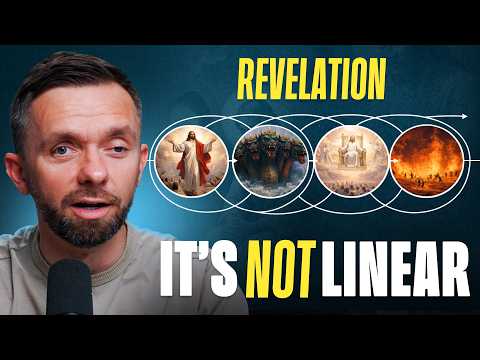
A letter from Paul to the Corinthians is making historical and theological claims in a way that Genesis 1 is not. The poetry of Psalms is doing something different from the genealogies of Numbers. The apocalyptic vision of Revelation is using a specific literary genre that its first audience understood as symbolic in a way that the Gospel of John's "in the beginning was the Word" is not. The text knows what it is. The question is whether we do.
The tree of knowledge — not a punishment, a portrait
The tree of the knowledge of good and evil is not a trap God set for humanity so he could catch them failing. It is a description of the human condition: we are the creatures who must choose. The capacity for moral knowledge — for knowing both good and evil — is inseparable from the capacity for love. You cannot have one without the other. A being who cannot choose cannot love. And a God whose deepest nature is love would not create beings incapable of it.
The story of Eden is the story of the beginning of self-consciousness. The moment a creature becomes aware enough to distinguish between good and evil — the moment moral consciousness arrives — it also becomes aware of its own smallness, its own nakedness, its own distance from the infinite. That is not a fall from perfection. It is the beginning of the journey toward it. The garden is not paradise lost. It is childhood left behind — necessary, painful, irreversible, and the beginning of something greater than innocence.
Every tradition that has looked carefully at this story has found the same thing: the "eating" is not the problem. The disconnection from God that follows is the problem. And that disconnection is not God's withdrawal — it is the creature's turning away, choosing the information the tree offered over the relationship that sustained everything. They hid. God came looking. That detail — God walking in the garden, calling "where are you?" — is not a dramatic touch. It is the whole theology.
The one who was wronged is the one who comes looking. That pattern has not changed.
The arc of human reaching
The Bible is not the beginning of humanity's relationship with the infinite, and it is not the end. It is the central document of its most critical chapter. Here is the arc it sits inside.
300,000–10,000 BC · Ghost cults and the first reaching. The earliest human religion was born in fear. Stones, hills, rivers, fire — anything powerful and incomprehensible became an object of worship. The dead were feared. Spirits required appeasement. The universe felt arbitrary and dangerous, and religion was the technology of survival. This was not stupidity. It was the maximum reach of a consciousness that had not yet received the clearer revelation it was reaching toward.
2000 BC · Melchizedek and the Salem mission. A figure with no genealogy and no death appeared in the hills near Salem — a priest of God Most High, who brought bread and wine to a weary soldier, received a tithe from the father of the faith, and then vanished. He planted the seed of monotheism. Every tradition that has approached monotheism in the Abrahamic world is downstream of that encounter in the King's Valley.
1400–400 BC · The Hebrew scriptures. The Old Testament is a human record of divine encounter, filtered through the evolving capacity of a people across a thousand years of history. It contains both genuine revelation and the fingerprints of human limitation. It shows us a God who in the earliest texts sounds territorial and tribal, and who by the later prophets sounds like pure love and justice. That progression is not evidence of inconsistency. It is evidence of a people growing in their capacity to receive what was always true. Hosea's "I desire mercy, not sacrifice" and Micah's "what does the Lord require of you but to do justice, love mercy, and walk humbly" are not corrections to earlier texts. They are the texts catching up to what God had always been trying to say.
30 AD · The incarnation and its aftermath. Jesus did not come to correct the Father's reputation — the Father did not need correcting. He came to demonstrate it. Every parable, every healing, every table overturned in the temple, every meal with the wrong people, every moment of forgiveness offered without prior payment — all of it was God saying in a human body and a human voice what could not be said in any other way: this is what I have always been like. The cross was not God punishing Jesus so he wouldn't have to punish us. It was humanity doing to the truth what humanity has always done to uncomfortable truth. And the resurrection was the truth refusing to stay buried.
The 2,000 years since. Christianity has spent two thousand years arguing about what happened. That argument is not a failure. It is the evidence of something alive. Dead things do not argue. Only things that matter generate two millennia of sustained intellectual and moral and spiritual energy. The word "Christian" was a nickname — the Jesus-people — coined by outsiders in Antioch to describe people who talked about him so constantly that they became identified with him. Two thousand years later they are still talking. Whatever is happening in that conversation, it is not nothing.
Now. And then there is you, reading this. Carrying whatever combination of faith and doubt and church hurt and genuine wonder brought you to this conversation. You are not at the end of the arc. Nobody is. The Bible is not the last word. It is the most important chapter of the story so far — written by human beings who were doing their absolute best to describe encounters with something infinite, using the only tool they had, which was finite language, and whose best, imperfect, beautiful, living record has outlasted every empire that has ever tried to suppress or contain it.
Evolutionary religion and revelatory religion
There are two streams of religious development running simultaneously through human history. Evolutionary religion is humanity reaching upward — real, sincere, touching something genuine — but limited by the capacity of the people doing the reaching. Revelatory religion is the divine breaking through that limitation and depositing something that could not have been arrived at by human effort alone. The Bible contains both. So does almost every serious spiritual tradition. The wisdom is in knowing which is which.
The Hebrew scriptures preserve many steps in the evolution of the Hebraic concept of Deity — from the primitive Yahweh up to the advanced and sublime concept of God that Isaiah portrayed. That is not a dismissal. It is a recognition that scripture is a living document — a record of growth, not a static artifact. The growth itself is the testimony.
The nature and character of God are best revealed in the life and teachings of Jesus of Nazareth. Not in the doctrine about Jesus. In the life.
In the way he moved through the world. In what he stopped for. In who he ate with. In what made him angry and what made him weep. In the unbroken consistency with which he demonstrated that the Father is not the fear-God of the ghost cults, not the demanding deity of religious performance, not the transaction-requiring lord of medieval theology — but a running, searching, receiving, weeping, celebrating Father who has been trying, through every tradition and every prophet and every genuine encounter across every civilization, to say one thing: I am not what you feared. Come home.
So is the Bible true?
Yes. In the ways that matter most, deeply and undeniably and in ways that hold up across every serious examination that has ever been made of it.
Is it true that human beings are moral creatures who keep choosing against the divine connection that sustains them? Is it true that the same God who made everything keeps searching, keeps sending, keeps pursuing even at the cost of being rejected? Is it true that love is stronger than death? Is it true that justice matters, that mercy is possible, that the suffering of the innocent is not the final word, that there is a reality underneath and beyond what we can see that is organized around our growth and our care? Is it true that the same spirit that was "in the beginning" — brooding over the formless dark before the first word of creation — is available to you, right now, in the interior of your own consciousness, waiting for you to be still enough to notice?
Yes. All of that is true. And the Bible, in its imperfect, human, contested, beautiful, living way — is the primary document of that truth in the Western world. Not because it dropped from the sky in its current form. But because it was written by people who were really there, who really encountered something, who really had their lives rearranged by what they found, and who did their level best to give the rest of us — across every generation and culture that has come after — a record of what they found and an invitation to find it too.
The Bible is not a science textbook or an eyewitness news report. It is a love letter — written in the genres available to its authors, shaped by the cultures they inhabited, carrying eternal truth in time-bound containers.
To ask if it is "literally true" is to hold the love letter up to the light and ask if the ink is archival quality. You have missed what it is for.
The question is the evidence
The tree in the garden was not a trap. It was the symbol of the capacity for knowledge — for genuine moral consciousness — without which there can be no genuine love. Every time a human being asks "is this true?" they are eating from that tree. The search for meaning is not a punishment for disobedience. It is the very thing we were made for. The fact that you cannot stop asking is the evidence that you are already on the journey the question was meant to begin.
The Bible is true the way a father's voice is true when he calls your name in the dark.
Not true in the way a theorem is true. Not true in the way a photograph is true. True in the way the most important things are true — irreducibly, experientially, in a way that cannot be proven to the satisfaction of anyone who has already decided not to look, and cannot be unproven once it has been genuinely encountered.
The entire history of humanity has been a single question, asked in ten thousand languages across 300,000 years: Is anyone there? Does it mean anything? Am I alone? The ghost cults were asking it. The Egyptian priests were asking it. Abraham in his tent, Moses at the burning bush, David weeping over his son, Isaiah in the temple when the seraphim shook the walls, Paul on the road to Damascus, John on Patmos writing to churches under persecution — all of them asking the same question. All of them receiving, in different forms and with different degrees of clarity, the same answer.
Yes. I am here. You are not alone. The suffering is not the final word. I have been running toward you since before you turned around. Come home.
That answer is what the Bible is trying to convey. Every genealogy, every psalm, every prophecy, every parable, every letter, every apocalyptic vision — they are all pointing at the same thing. And the thing they are pointing at is not a doctrine. It is a Person. And that Person has been, is now, and always will be the most real thing in any room you have ever been in.
The search for meaning that began in the garden — the first reaching toward the tree of knowledge — is still happening. In you, right now, reading this. That search is not a symptom of the fall. It is the evidence of the ascent. And it ends, the longest and best tradition in human spiritual history insists, not in information but in union — with the one who planted the tree, who walked in the garden, who called out "where are you?" and then, when nobody came back, went looking himself.
God is not hiding. He never was. The seeking is itself the finding — and the finding is just the beginning of everything that comes after.
Join the conversation
Comments & ideas
Have a thought, a question, or something this stirred up? Leave it below.
Loading comments…
Keep exploring
Related Bible questions
- Who was actually responsible for killing Jesus?
- Why didn't people recognize Jesus after the resurrection?
- Is Jesus coming back, and when?
- Who is Satan — and why did he fall?
- Do angels exist — are they real?
- Do aliens exist — and how are they related to the Bible?
- What are miracles, what are they made of, and can I perform them?
- Can we shape our reality — can ordinary people do miracles?
Watch alongside